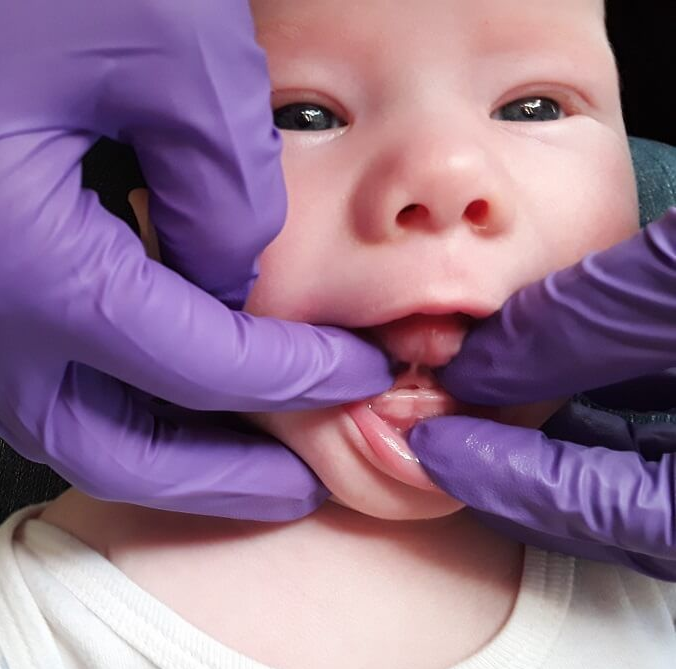
InfaNT TONGUE TIE & Lip Tie Releases (frenectomy procedure)
Expert Evaluation and Treatment for Infant Lip and Tongue Ties.
At Hometown Pediatrics, infants who may have a tongue-tie or lip-tie first receive a comprehensive feeding and oral evaluation. During this visit, we assess your baby’s oral anatomy, feeding function, and any concerns such as difficulty latching, clicking while feeding, poor weight gain, or maternal nipple pain. If a tongue-tie or lip-tie release is recommended, our team will review the treatment plan with you and verify your insurance benefits before scheduling the procedure. For newborns who do not yet have active insurance coverage, we offer a self-pay option and provide families with a detailed superbill that can be submitted to their insurance once coverage is established.
Signs Your Baby May Have a Tongue-Tie or Lip-Tie
Some babies with tongue-tie or lip-tie may have difficulty feeding effectively. While every baby is different, common signs that may indicate a restriction include:
- Difficulty latching or staying latched during breastfeeding or bottle feeding
- Clicking sounds while feeding
- Leaking from sides of mouth
- Frequent slipping off the breast or bottle
- Poor weight gain or prolonged feeding times
- Gassiness or frustration during feeds, reflux symptoms
- Maternal nipple pain or damage during breastfeeding
If you are experiencing any of these concerns, our team can evaluate your baby and help determine whether a tongue-tie or lip-tie may be contributing to feeding difficulties.
What to Expect During the Procedure
If a tongue-tie or lip-tie release is recommended, the procedure is performed in the office at Hometown Pediatrics. The release is completed using a specialized laser designed for precise treatment of oral ties. The procedure itself typically takes only a few minutes. Most babies are able to feed immediately afterward, which can be both comforting and helpful for healing. Our team will provide parents with detailed aftercare instructions and will answer any questions to help ensure the best possible outcome for your baby.